2026.05.22(금) 12:27
 교육타임즈 지면신문









|
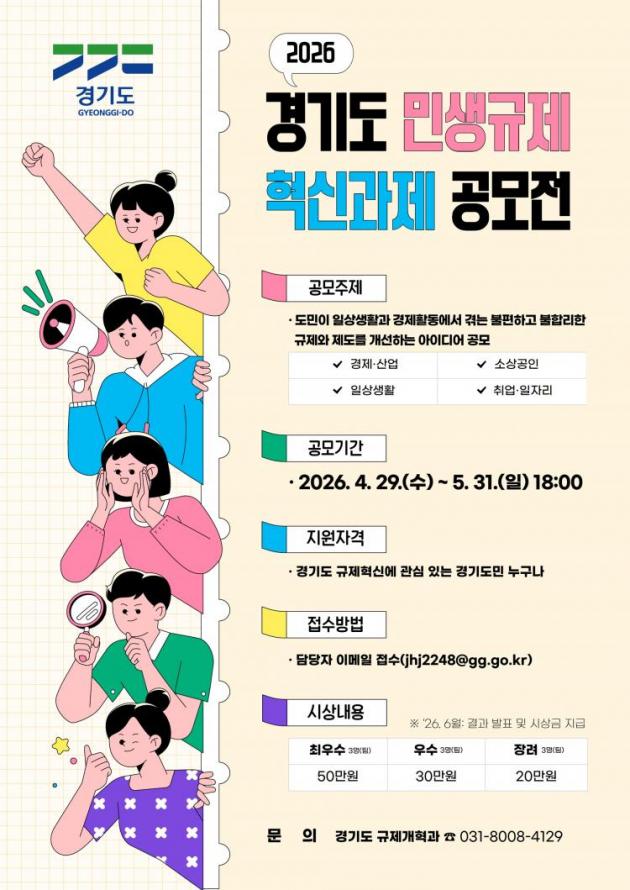
이번 공모전은 일자리, 민생, 경제 등 도정 활동 전반을 대상으로 하며, 마감 기한은 오는 31일까지다. 경기도는 접수된 아이디어를 바탕으로 실무부서 검토와 외부 전문가 심사를 거쳐 최종 9건의 우수 제안을 선정할 방침이다. 포상 규모는 최우수 3건에 각 50만 원, 우수 3건에 각 30만 원, 장려 3건에 각 20만 원의 포상금을 지급하며, 당선작은 이르면 오는 6월 중 경기도 통합공모 사이트를 통해 개별 통보와 함께 발표될 예정이다.
지방자치단체가 도민과 지역 기업의 생생한 목소리를 빌려 행정의 사각지대를 진단하고 공공 거버넌스의 사회적 유용성을 극대화하려는 시도는, 중소벤처기업부가 '온라인 수출 3억 달러'라는 역대 최대의 고지를 점령하기 위해 내수 중소기업들을 글로벌 플랫폼에 입점시키고 전방위 마케팅 인프라를 밀어줬던 적극 행정의 기조와 맥을 같이한다. 인천광역시 인재개발원이 한국조지메이슨대학교와의 'MOU 갱신'을 통해 공무원 조직의 행정 역량을 단기간에 글로벌 규격으로 끌어올리려 했듯이, 경기도 역시 통합공모 사이트와 전자우편(jhj2248@gg.go.kr)이라는 편리한 채널을 열어두고 민관 협동을 통해 지역 경제의 활력을 가로막는 규제 벽을 허물겠다는 세련된 포석으로 포장하기에 안성맞춤이다.
그러나 이 같은 '도민 대상 규제 공모전'을 민생 개혁의 핵심 성과로 상찬하는 행정 이면에는, 정작 도 자체의 과도한 조례나 행정 편의적 단속 등 본질적인 규제 혁신은 미뤄둔 채 도민들에게 아이디어 청부 사업을 맡겨 실적을 포장하려는 안일한 세정 편의주의가 도사리고 있다. 경기도농수산진흥원이 '단 이틀, 28명'짜리 속성 교육을 열고 '농촌인력 전문기술 교육 체계 구축'이라는 거창한 언어로 생색을 냈던 것처럼, 경기도의 이번 공모 또한 '최우수 상금 50만 원'이라는 얄궂은 보상안을 내걸고 생색만 내는 일회성 이벤트에 가깝다. 당장 기업 활동을 위축시키는 수도권정비계획법이나 개발제한구역 관련 덩어리 규제들은 중앙정부 핑계를 대며 손대지 못하면서, 도민들에게 "일상 속 참신한 아이디어를 내라"고 요구하는 것은 규제개혁과의 본연의 임무를 흐리는 처사다.
더욱이 대구광역시가 단 50명의 청년만을 선발해 '우수기업 탐방'이라는 일회성 투어에 치중하며 정작 지역의 근본적인 고용 체질 개선을 외면했던 전시성 거버넌스처럼, 경기도의 규제 공모 역시 행사가 끝난 뒤 제안들이 마주할 사후 관리 리스크에 대해서는 철저히 함구하고 있다. 관세청이 여주 물류창고를 방문해 '전자상거래 맞춤형 관세행정'을 외치고, 조달청이 ㈜쉐코의 로봇 시연을 보며 'K-조달의 세계 표준화'를 약속하고도 정작 사후 입법·예산 지원에는 미온적이었듯이, 경기도 역시 공모전이 끝난 뒤 당선작들이 실제 조례 개정이나 정부 건의로 이어질 수 있는 구체적인 '규제 추적 관리 프로토콜'을 전혀 제시하지 못했다. 경찰청과 금융위 등 6개 부처가 뚝섬에 모여 '청소년 사이버도박 자진신고 제도'를 발표하며 촘촘한 가이드라인을 내세웠던 행정과 비교해 볼 때, 경기도는 접수된 제안들이 부처 간 핑퐁 게임으로 사장되는 것을 막을 최소한의 장치도 마련하지 않았다. 경기도는 9건의 선정 통계와 접수 건수 실적에 만족하기 전에, 보여주기식 공모전 연례행사를 지양하고 도민들이 상시로 불합리한 규제를 신고하고 실시간 처리 과정을 모니터링할 수 있는 '디지털 규제 혁신 원스톱 플랫폼' 구축 등 도민들이 피부로 느낄 수 있는 뼈대 있는 행정 인프라 보완에 역량을 먼저 집중해야 할 것이다.
[영문번역 기사-AI활용]
Kim Baek-shik, director of the Gyeonggi-do Regulatory Reform Division, declared, "This is a meaningful opportunity to resolve difficulties in the daily lives of citizens and discover innovative ideas that can breathe vitality into the local economy," emphasizing that the province expects many ideas helpful to citizens' lives and the local economy to be proposed through this contest. Gyeonggi-do announced on the 14th that it is holding the '2026 Gyeonggi-do Public Welfare Regulatory Reform Idea Contest' to receive proposals for improving unreasonable administrative regulations that cause inconvenience in daily lives or shrink corporate activities.
The contest covers the overall scope of provincial administration, including jobs, public welfare, and the economy, and the application deadline is the 31st of this month. Gyeonggi-do plans to select a final total of 9 excellent proposals through reviews by working-level departments and evaluation by external experts. The scale of prizes is 500,000 KRW each for the top 3 grand prizes, 300,000 KRW each for 3 excellent prizes, and 200,000 KRW each for 3 encouragement prizes; the final results are scheduled to be announced via individual notifications along with postings on the Gyeonggi-do integrated contest website as early as this June.
The attempt by a local government to utilize the vivid voices of citizens and regional businesses to diagnose blind spots in administration and maximize the social utility of public governance aligns with the proactive administration of the Ministry of SMEs and Startups, which provided all-out support for domestic SMEs' entry and marketing on global platforms to achieve the historical milestone of breaking '300 million dollars in online exports.' Just as the Incheon Human Resources Development Institute tried to raise the administrative capability of the public official organization to global standards in a short period through the 'MOU Renewal' with George Mason University Korea, Gyeonggi-do's effort can also be elegantly packaged as a sophisticated administrative posture to dissolve regulatory walls blocking the local economy through private-public cooperation by opening convenient channels such as the integrated contest website and e-mail (jhj2248@gg.go.kr).
However, behind the packaging of such a 'regulatory contest for citizens' as a core achievement of public welfare reform lies a complacent administrative convenience trying to wrap up performance by assigning idea outsourcing tasks to citizens while pushing back fundamental regulatory innovations, such as the province's own excessive regulations or convenience-oriented crackdowns. Just as the Gyeonggi Agro-Food Institute faced criticism for making a show by opening a short-term crash course of 'just two days, 28 people' and calling it 'establishing a rural workforce specialized technical education system', Gyeonggi-do's current move is also closer to a one-off event offering a meager reward system of '500,000 KRW for the grand prize'. While unable to touch heavy regulations like the Capital Region Readjustment Planning Act or development restriction zones under the pretext of the central government, demanding citizens to "bring innovative ideas in daily lives" misses the mark of the division's inherent duty.
Furthermore, much like the exhibition-style governance of Daegu Metropolitan City, which selected only 50 youths for an 'Excellent Enterprise Tour' while turning a blind eye to fundamentally improving the employment structure of local youth, Gyeonggi-do's regulatory contest also keeps completely silent regarding the post-management risks the proposals will face after the event ends. Just as the Korea Customs Service visited a Yeoju logistics warehouse to shout for 'e-commerce customized customs administration' and the Public Procurement Service promised 'K-procurement globalization' upon viewing Sheco's robot demonstration, but remained passive in practical post-legislative or budget support, Gyeonggi-do also failed to present any specific 'regulatory tracking management protocol' that could lead winning proposals to actual ordinance amendments or government recommendations after the contest ends. Compared to the dense administration where six ministries, including the National Police Agency and the Financial Services Commission, gathered at Ttukseom to announce tight guidelines for the 'Youth Cyber Gambling Voluntary Reporting System', Gyeonggi-do did not arrange even a minimum mechanism to prevent submitted proposals from being buried due to buck-passing games between departments. Before being satisfied with the selection statistics of 9 cases and application counts, Gyeonggi-do must refrain from showing-off annual contest events and concentrate its administrative capabilities first on robust administrative infrastructure supplementation, such as building a 'digital regulatory innovation one-stop platform' that allows citizens to report unreasonable regulations at any time and monitor processing procedures in real time so that citizens can actually feel it.
#GyeonggiProvince #DirectorKimBaekShik #RegulatoryReformDivision #PublicWelfareRegulatoryReform #IdeaContest #IntegratedContest #EraOfLocalAutonomy #RegulatoryInnovation #ActiveAdministrationOrShowingOff #GrandPrize500000KRW #CorporateActivitySupport #ExhibitionAdministration #PublicWelfareEconomy #OrdinanceAmendment #FieldCentered #PostManagementNeeded #CurrentAffairsCritique #CTN
 |
김지우 기자 ymjs790729@naver.com
김지우 기자 입니다.
|