2026.05.30(토) 19:26
 교육타임즈 지면신문









|
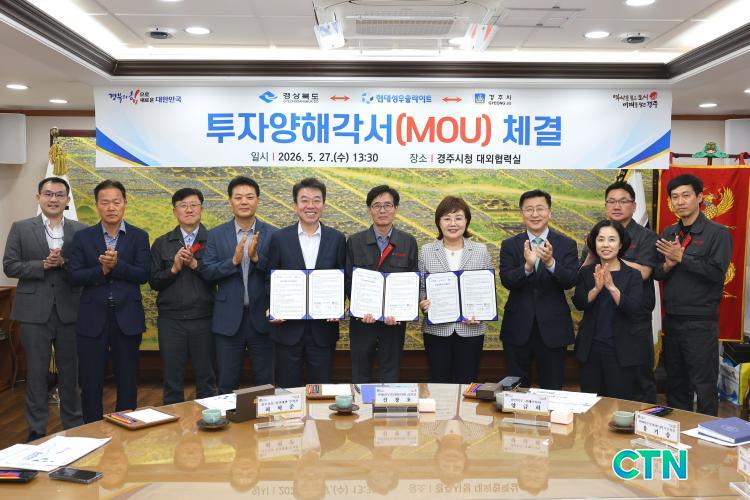
가장 치명적인 맹점은 322억 원이라는 막대한 투자 규모에 비해 지역 사회가 얻을 실질적인 이익이 턱없이 부족하다는 점이다. 시는 생산 능력이 연간 120만 대에서 225만 대까지 두 배 가까이 확대된다고 대대적으로 홍보했으나, 이로 인해 창출되는 신규 고용 인원은 고작 10명에 불과하다. 대규모 제조 공장 증설임에도 일자리 창출 효과가 이토록 미미한 것은 자동화 설비 도입에만 치중된 투자이기 때문이다. 그럼에도 경주시와 경북도는 인허가 특혜와 세제 감면 등 전폭적인 행·재정적 지원을 약속해, 시민의 혈세와 행정력을 특정 기업의 생산성 향상에만 고스란히 바치는 꼴이 되었다.
또한 이번 협약은 지난 2022년에 이미 체결했던 경주공장 증설 투자협약을 이름만 바꾸어 다시 발표한 것에 지나지 않는다. 신규 투자 유치 실적이 부족하자 수년 전 이미 추진하기로 합의된 사안을 '본격적인 투자 실행 단계'라는 그럴싸한 핑계로 포장해 다시 한번 언론에 흘린 셈이다. 이처럼 과거의 치적을 재탕, 삼탕하며 새로운 성과인 양 호도하는 관행은 지자체 단체장들의 실적 조급증이 만들어낸 단면이다.
결국 경주시의 이번 미래차 경쟁력 강화 협약은 알맹이 없는 보여주기식 성과주의의 결과물이다. 친환경차와 고성능 차량 수요 증가로 기업의 매출과 시장 지배력은 빠르게 성장하겠지만, 정작 지역 주민들이 체감할 수 있는 경기 부양이나 대규모 고용 효과는 기대하기 어렵다. 경주시는 무조건적인 퍼주기식 행정 지원을 남발하기 전에, 투자 금액 대비 지역 사회의 고용 기여도와 낙수효과를 철저히 따져 묻는 실리적인 행정으로 전면 전환해야 한다.
[영문번역 기사-AI활용]
Choi Hyuk-joon, Acting Mayor of Gyeongju, said, "I think it is meaningful that the investment project prepared for a long time is being promoted in earnest. We will do our best to provide administrative and financial support for the stable investment of enterprises and win-win development of the region." This is a self-evaluation of Gyeongju City and Gyeongsangbuk-do signing a Memorandum of Understanding (MOU) to invest 32.2 billion won with Hyundai Sungwoo Solite to expand AGM battery production lines at the existing factory in Geoncheon 1 Industrial Complex. However, criticism is raised that this agreement is a typical example of poor employment indicators hidden behind flashy investment figures and old MOU reuse administration repeated in other local governments.
The most critical blind spot is that the practical benefits that the local community will obtain are dreadfully insufficient compared to the massive investment scale of 32.2 billion won. The city extensively promoted that production capacity would double from 1.2 million units to 2.25 million units per year, but the new employment generated by this is only 10 people. The reason why the job creation effect is so minimal despite the large-scale manufacturing factory expansion is because the investment is focused only on introducing automated facilities. Nevertheless, Gyeongju City and Gyeongsangbuk-do promised full administrative and financial support, such as preferential licensing and tax reductions, dedicating citizens' tax money and administrative power entirely to improving the productivity of a specific company.
In addition, this agreement is nothing more than a re-announcement of the Gyeongju factory expansion investment agreement already signed in 2022 under a different name. As new investment attraction performance was lacking, an item already agreed to be promoted years ago was packaged under the plausible excuse of 'earnest investment execution stage' and leaked to the media once again. This practice of reheating past achievements two or three times and misleading them as if they were new achievements is a cross-section created by local government leaders' anxiety over performance.
In the end, Gyeongju City's current future vehicle competitiveness strengthening agreement is the product of hollow showy performance-oriented approach. While the company's sales and market dominance will grow rapidly due to increasing demand for eco-friendly and high-performance vehicles, it is difficult to expect economic stimulus or large-scale employment effects that local residents can actually feel. Before distributing unconditional administrative support, Gyeongju City must completely switch to pragmatic administration that thoroughly examines the employment contribution and trickle-down effect on the local community relative to the investment amount.
 |
이수현 기자 leegikook@hanmail.net
|