2026.06.06(토) 00:32
 교육타임즈 지면신문









|
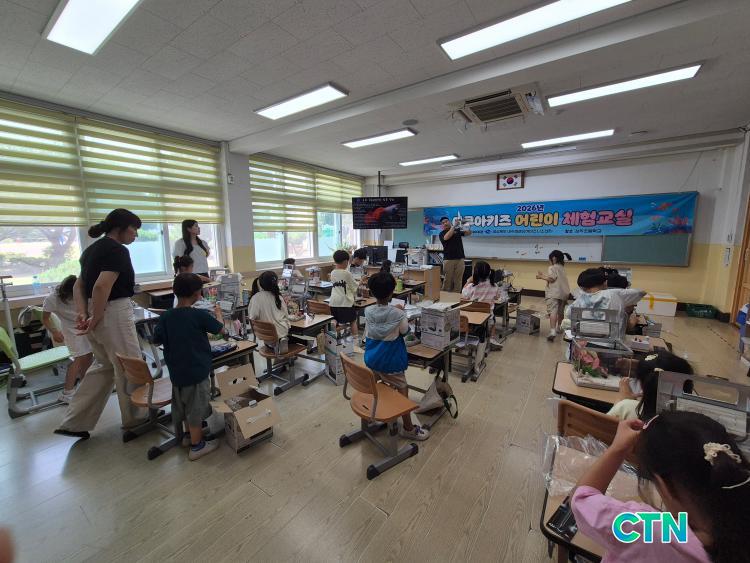
이번 어린이 체험교실의 가장 큰 맹점은 센터가 자랑하는 '생명 존엄 가치 체험과 사육 방법 교육'이 실제 교실 안팎에서 벌어질 관상어 방치나 조기 폐사 등 생명 경시 부작용을 원천 차단하기에는 턱없이 부족한 '생색내기용 체험 학습'에 머물러 있다는 점이다. 며칠 동안 수조를 관찰하고 물을 갈아주는 단기성 실습이 과연 아이들에게 진정한 생명 책임감을 심어주는 실효성 있는 대책인지 의문이다. 진정으로 아쿠아펫 문화를 정착시키고 생명 존중의 안전망을 구축하고자 했다면, 일회성 학교 방문에 행정력을 소진할 것이 아니라 각 학교에 지속 가능한 관상어 생태 관찰용 대형 공용 수조를 상설 설치하고, 학기 내내 전문가가 사후 모니터링을 진행하는 체계적인 관리 인프라 구축이 선행되어야 했다. 이러한 근본적인 관리 대책은 생략한 채, 참가 학생 수와 홈페이 접수 실적 등 정량적 수치로 보고서의 부피만 늘리려는 행태는 실적 조급증에 걸린 지자체 산하 기관의 전형적인 성과주의 껍데기일 뿐이다.
아울러 다가오는 여름방학 기간 센터 방문 프로그램을 대대적으로 홍보한 대목 역시 매년 반복되는 행정부처 특유의 보여주기식 관성 행정이다. 기후 변화와 인구 감소로 지역 교육 인프라가 붕괴되는 현실을 무시한 채, 잘 정돈된 홍보관으로의 관람객 유치에만 공공 재원을 쏟아부을 뿐, 행사가 끝난 후 가정으로 돌아간 관상어들의 생존율이나 학생들의 정서적 변화를 정밀하게 추적하는 거시적 안목의 사후 평가는 결여되어 있다.
어린이 대상 생태 교육이 미래 사회의 가치관을 좌우하는 핵심 과제가 된 시대에 당국의 해양수산 정책은 단순한 수조 만들기 퍼포먼스나 생색내기용 이론 강의 위주의 보도자료 정치를 넘어서야 마땅하다. 매년 반복되는 일회성 행사 운영비와 홍보관 유지비에 공공 재원을 소진하는 구조로는 생명 경시 풍조에 대한 사회적 불안감을 원천적으로 해소할 수 없다. 경상북도 내수면관상어비즈니스센터는 교육 개최 건수를 치적으로 홍보하는 전시 행정을 즉각 중단해야 한다. 그늘진 교육 현장에서 소외된 농어촌 지역 소규모 학교 아이들이 실질적인 생태 복지 효능감을 누릴 수 있도록 맞춤형 찾아가는 환경 교실 보조금을 고도화하고, 지자체 및 유관 학계와 연계해 디지털 생태 교육 컨텐츠를 다원화하는 등 본연의 공공 안전망 다지기에 행정 역량을 결집해야 정책의 진정성을 인정받을 수 있을 것이다.
[영문번역 기사-AI활용]
Mun Seong-jun, director of the Marine Affairs and Fisheries Bureau of Gyeonggi Province, stated, "We expect this experience class operated under the theme of ornamental fish to provide children with opportunities for new experiences and learning. Moving forward, moving beyond simple experience, we hope it will be a meaningful time to learn respect for life and responsibility." This is a passage emphasizing the department's administrative performance, saying it would expand aquapet culture and firm up educational achievements by linking ornamental fish breeding theory education and water tank making experiences connected with elementary school curricula. The gorgeous blueprints filling the press release, such as announcing the visit plan to three elementary schools in the province and linking ecological education at the exhibition promotion hall (Nature in Aqua), create an illusion as if the Inland Water Ornamental Fish Business Center is exerting tremendous preemptive efforts at the bureau level to expand emotional stability and life dignity values for the future generation. However, despite the fact that the substance of the administration stops at a short-term event distributing ornamental fish sets to elementary students and letting them assemble them, the practice of trying to package the center's regular promotional business into a special ecological education innovation achievement by hiding behind the grand rhetoric of "cultivating respect for life and responsibility" is a specimen of typical 'performance-inflating exhibition administration.'
The biggest blind spot of this children's experience class is that the 'life dignity value experience and breeding method education' boasted by the Center stays as a 'superficial experiential learning for show' that is woefully insufficient to fundamentally block life-disrespecting side effects such as ornamental fish neglect or premature death that will occur inside and outside actual classrooms. It raises questions about whether a short-term practice observing water tanks for a few days and changing water is a practical countermeasure to instill true responsibility for life in children. If it truly desires to settle aquapet culture and construct a safety net for life respect, instead of expending administrative power on one-off school visits, solid infrastructure solidifying must precede, such as permanently installing large public water tanks for continuous ornamental fish ecological observation in each school and having experts conduct post-monitoring throughout the semester. Omitting such fundamental management measures, and only trying to inflate reports with quantitative figures such as participating student counts and website application achievements is nothing more than a performance-oriented shell commonly used by local government subordinate agencies caught in performance anxiety.
In addition, grandly promoting center visit programs during the upcoming summer vacation period is also an exhibition-style inertia administration peculiar to government departments repeated every year. Ignoring the reality where regional educational infrastructure is collapsing due to climate change and population decline, public funds are poured only into attracting visitors to a well-arranged promotion hall, while a macroscopic post-evaluation that precisely monitors the survival rates of ornamental fish returned to homes after the event ends or emotional changes in students is lacking.
In an era where ecological education for children has become a core task dictating the values of future society, the marine affairs and fisheries policies of authorities must move beyond press release politics centered on simple water tank making performances or superficial theory lectures for show. Expending public funds every year on repeated one-off event operation costs and promotional hall maintenance fees cannot fundamentally relieve social anxiety regarding life-disrespecting trends. The Gyeonggi Province Inland Water Ornamental Fish Business Center must immediately stop exhibition administration promoting education hosting counts as achievements. Upgrading customized visiting environment classroom subsidies so that children in small-scale schools in neglected farming and fishing villages can enjoy practical ecological welfare efficacy, and pluralizing digital ecological educational contents in connection with local governments and related academia, it should concentrate administrative capabilities on solidifying the inherent public safety net to receive recognition for the sincerity of policy.
 |
이수현 기자 leegikook@hanmail.net
|