2026.06.17(수) 14:51
 교육타임즈 지면신문









|
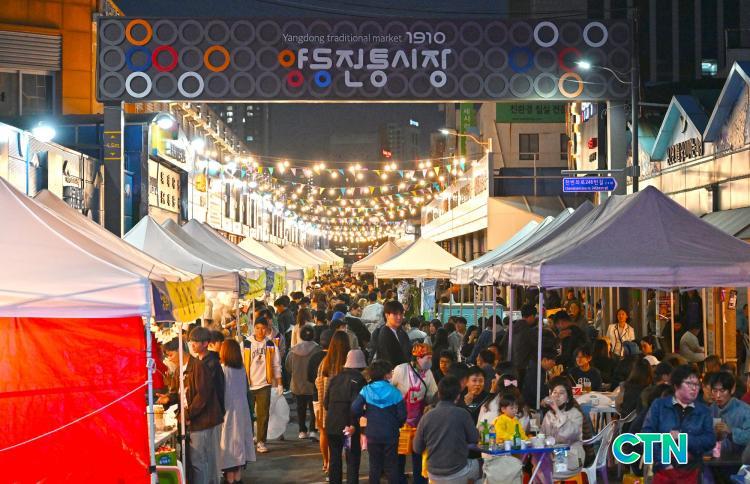
광주광역시는 중소벤처기업부가 주관하는 '백년시장 공모사업'에 양동시장이 최종 선정됐다고 지난 16일 발표했다. 양동시장은 1910년대 광주교 아래 백사장에서 열리던 5일장을 모태로 한 100년 역사의 유서 깊은 전통시장이다. 이번 공모는 70년 이상의 역사성과 문화적 가치를 지닌 전통시장을 브랜드화하는 국책 사업으로, 양동시장에는 오는 2027년 12월까지 2년간 국비 60%를 포함해 최대 30억 원의 사업비가 투입된다. 광주시는 '일상의 문화가 스며있는 양동'을 비전으로 제시하고, 양동시장 건물을 리모델링해 공유주방과 옥상 식사(다이닝) 공간을 조성할 계획이다. 또한 야시장 운영과 특화 관광코스 개발, 우수 맛집 발굴, 외국인 쇼핑환경 개선 등을 통해 종합적인 상권 활성화를 도모한다는 방침이다.
지자체가 지역의 역사적 자산인 노후 전통시장을 단순한 시설 현대화 사업에 묶어두지 않고, 중앙정부의 대규모 예산 확보를 통해 체험형 복합문화공간으로 재창조하려는 시도는 지역 경제 활성화 측면에서 실효성 높은 행정 사례로 풀이된다. 특히 공유주방 등 트렌디한 공간 기획을 접목하고 외국인 수용 태세를 정무적으로 정비해 호남 최대 상권의 명성을 복원하려 한 대목은 광주시의 정교한 정무적 판단이 반영된 결과다.
그러나 일각에서는 이러한 명품화 정책이 전국 지자체마다 우후죽순 격으로 추진하는 야시장 개장이나 공유주방 조성 등 단발성 보여주기식 전시 행정을 그대로 복제한 수준에 그치고 있다는 지적도 나온다. 백년시장 타이틀과 예산 지원을 확보했더라도, 정작 전통시장 특유의 고질적인 주차난이나 위생 문제, 청년 상인 유입 유도 실패 등 기초적인 체질 개선이 사후적으로 동반되지 않는다면 막대한 세금만 낭비한 채 인구 소멸과 유통 대기업 공세에 밀려 사후 먹통이 될 위험이 크기 때문이다. 이에 따라 공모 사업 종료 이후에도 지속 가능한 상권 자생력을 확보할 수 있도록 상인회와의 사후 협력 체계를 강화하고 실질적인 매장 유치 전략을 고도화하는 실무 상설 관리망 등 사후 보완책 마련이 시급하다는 목소리가 힘을 얻고 있다.
[영문번역 기사-AI활용]
Baek Eun-jung, Chief of the Economic Policy Division of channels in Gwangju Metropolitan City, stated, "This public offering selection is a meaningful achievement recognizing the historical value and various charms of Yangdong Market, which has been with local residents for a long time. We will do our best to promote the project so that Yangdong Market can move toward the next 100 years in addition to its past 100-year history." Gwangju Yangdong Market, the largest traditional market in the Honam region, is attempting to improve its structure into a representative luxury market in Korea with full support from the government budget.
Gwangju Metropolitan City announced on the 16th that Yangdong Market was finally selected for the '100-Year Market Public Offering Project' hosted by the Ministry of SMEs and Startups. Yangdong Market is a historic traditional market with a 100-year history that originated from a 5-day market held on the white sand beach under the Gwangju Bridge in the 1910s. This public offering is a national project to brand traditional markets with more than 70 years of history and cultural value, and a maximum project cost of 3 billion won, including 60% of national funds, will be injected into Yangdong Market for two years until December 2027. Gwangju City presented the vision of 'Yangdong where daily culture permeates' and plans to remodel the Yangdong Market building to create a shared kitchen and rooftop dining space. In addition, the city plans to promote overall commercial district vitalization by operating night markets, developing specialized tour courses, discovering excellent restaurants, and improving the shopping environment for foreigners.
The move where the local government did not lock the aged traditional market, which is a local historical asset, into a simple facility modernization project, but instead tried to recreate it as an experiential complex cultural space through securing large-scale budgets from the central government, is interpreted as a highly effective administrative case in terms of regional economic vitalization. In particular, grafting trendy space planning such as shared kitchens and politically rearranging the acceptance posture for foreigners to restore the reputation of Honam's largest commercial district highlights the reflection of Gwangju City's sophisticated political judgment.
However, some critics point out that these luxury-oriented policies merely duplicate short-term show-style exhibition administrations, such as opening night markets or creating shared kitchens, which are pushed forward indiscriminately by local governments nationwide. Even if they secured the 100-year market title and budget support, if basic structural improvements such as chronic parking shortages typical of traditional markets, sanitation issues, or failure to induce the influx of young merchants are not accompanied in a post-manner, there is a high risk that it will become defective in a post-manner, losing to the offensive of distribution conglomerates and population extinction while wasting enormous taxes. Accordingly, voices are gaining ground calling for urgent follow-up supplementary measures, such as a practical permanent management network, to strengthen the post-cooperation system with the merchant association and elaborate practical store attraction strategies so that sustainable commercial district self-reliance can be secured even after the public offering project ends.
 |
최영준 기자 gildongmoo2@hanmail.net
굴곡 없는 참시선으로
|