2026.06.17(수) 14:51
 교육타임즈 지면신문









|
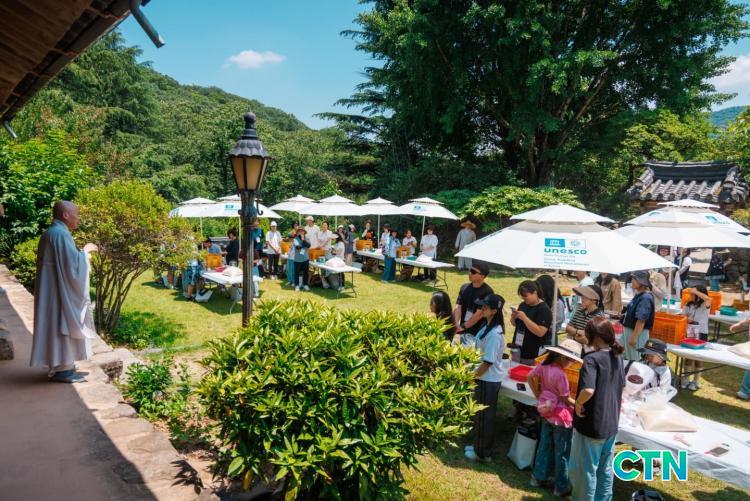
별스런협동조합과 한국불교태고종 총본산 선암사는 선암사 무우전 일원에서 사전 신청자 50명을 대상으로 '선암사 대복(大福) 매실청 담그기 행사'를 지난 14일 개최했다고 발표했다. 이번 행사는 선암사가 보유한 천연기념물 '선암매'의 역사적·학술적 가치를 고양하고, 전통 매실 수확 체험을 통해 참가자들의 건강을 기원하고자 기획됐다. 선암매는 고려 시대 중건한 선암사 삼강문 옆 와송과 함께 오랜 매화 기록을 간직한 대한민국 대표 천연기념물이다. 이날 행사는 만세루 앞 참가자 등록을 시작으로 사찰식 점심 공양, 문화유산 전문 해설사와 함께하는 선암사 해설 투어로 이어졌다. 이어 참가자들은 운수암 앞에서 대복 매실을 직접 수확하는 '매실 따기 체험'을 진행한 뒤, 인당 5L 분량의 매실청을 직접 담그는 '청 만들기' 프로그램을 소화하며 일정을 마무리했다.
지자체와 지역 협동조합이 세계문화유산이라는 정형화된 공간을 눈으로만 보는 소극적 관람에 묶어두지 않고, 천연기념물인 식물 자원과 사찰 문화 콘텐츠를 결합해 소비자가 직접 참여하는 융합형 체험 행정으로 확장한 시도는 문화유산 6차산업화 측면에서 실효성 높은 행정 사례로 풀이된다. 특히 조선 왕실과의 인연을 스토리텔링화해 해설 투어에 녹여내고, 사찰 공양과 수확 체험을 유기적으로 연계해 정무적으로 지역 문화 브랜드의 가치를 고도화하려 한 대목은 순천시의 정교한 문화 행정 기획력이 반영된 결과다.
그러나 일각에서는 이러한 문화재 활용 정책이 단 50명이라는 제한된 인원을 대상으로 한 매실청 담그기 등 전국의 농촌 마을이나 사찰에서 우후죽순 행해지는 단발성 체험 행정을 그대로 복제한 수준에 그치고 있다는 지적도 나온다. 세계유산의 가치를 홍보한다는 명분을 내세웠더라도, 정작 행사가 종료된 이후 선암매의 학술적 보존 대책이나 상설적인 문화 콘텐츠로의 확장, 혹은 지역 농가와의 사후 경제적 연계망 구축 등이 실무적으로 동반되지 않는다면 막대한 행정 자원만 낭비한 채 사후 먹통이 될 위험이 크기 때문이다. 이에 따라 행사성 이벤트를 넘어 지속 가능한 지역 상생 모델을 확보할 수 있도록 사후 콘텐츠 유통망을 강화하고 실질적인 문화유산 보존·활용 전략을 고도화하는 실무 상설 관리망 등 보완책 마련이 시급하다는 목소리가 힘을 얻고 있다.
[영문번역 기사-AI활용]
An official from Suncheon City stated, "We will widely promote the precious cultural value of Seonamsa Temple and the natural monument Seonammae, and drive various projects to coexist with local residents by utilizing the value of this heritage." Seonamsa Temple in Suncheon, a UNESCO World Cultural Heritage and a thousand-year-old ancient temple, has showcased a popular cultural heritage utilization experience program using the historical space imbued with the prayers of the Joseon royal court.
The Byeolsureon Cooperative and Seonamsa Temple, the headquarters of the Korean Buddhist Taego Order, announced that they successfully held the 'Seonamsa Temple Daebok Plum Syrup Making Event' for 50 pre-registered participants around the Muujeon area of Seonamsa Temple on the 14th. This event was designed to enhance the historical and academic value of 'Seonammae,' a natural monument owned by Seonamsa Temple, and to pray for the health of participants through a traditional plum harvesting experience. Seonammae is Korea's representative natural monument plum tree that has kept long plum records along with the Wasong (lying pine tree) next to Samgangmun Gate of Seonamsa Temple, which was reconstructed during the Goryeo Dynasty. The event started with participant registration in front of Manseru Pavilion, followed by a temple-style lunch offering and a Seonamsa explanation tour with a cultural heritage professional commentator. Subsequently, participants conducted a 'Plum Picking Experience' to directly harvest Daebok plums in front of Unsuam Hermitage, and completed the schedule by digestion of the 'Syrup Making' program to directly make 5L of plum syrup per person.
The move where the local government and the local cooperative did not lock the standardized space of a World Cultural Heritage into passive viewing only with eyes, but instead expanded it into an experiential convergence administration participated directly by consumers by combining natural monument plant resources and temple culture contents, is interpreted as a highly effective administrative case in terms of the sixth-industryization of cultural heritage. In particular, storytelling the relationship with the Joseon royal court into the commentary tour and organically linking the temple offering and harvesting experience to politically advance the value of the local cultural brand highlights the reflection of Suncheon City's sophisticated cultural administration planning power.
However, some critics point out that these cultural property utilization policies merely duplicate short-term experience administrations, such as plum syrup making targeted at a restricted number of only 50 people, which are carried out indiscriminately by rural villages or temples nationwide. Even if they put forward the justification of promoting the value of World Heritage, if academic preservation measures for Seonammae, expansion into a permanent cultural content, or building a post-economic connection network with local farms are not practically accompanied after the event ends, there is a high risk that it will become defective in a post-manner, wasting massive administrative resources. growth. Accordingly, voices are gaining ground calling for urgent follow-up supplementary measures, such as a practical permanent management network, to strengthen the post-content distribution network and elaborate practical cultural heritage preservation and utilization strategies so that a sustainable regional coexistence model can be secured beyond show-style events.
 |
하성매 기자 jyh7583@naver.com
하성매 기자 입니다.
|