2026.05.22(금) 13:42
 교육타임즈 지면신문









|
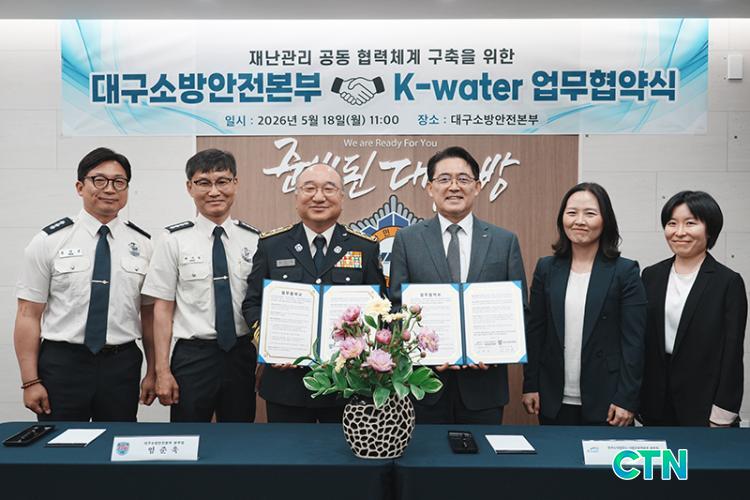
양 기관은 이번 협약을 통해 소방 출동로 확보, 소방용수 취수 가능 지점 및 긴급구조 지원자원 등 시설물 활용·관리 정보를 공유하고, 재난 발생 시 합동 훈련과 상호 지원, 소방안전교육 및 홍보활동을 함께 전개하기로 뜻을 모았다. 국가 핵심 기반시설인 낙동강 유역의 수자원 관리 인프라와 대구 지역의 재난 컨트롤타워가 결합해 복합 재난에 대응하는 시너지 효과를 내겠다는 구상이다.
지자체 산하 소방본부와 공기업이 손을 잡고 재난 대응 시스템을 유기적으로 연계해 공공 안전망의 사각지대를 해소하려는 시도는, 인천광역시가 군·구 단위까지 매칭 예산을 세밀하게 조율하며 '청소년참여위원회'를 가동해 미래 세대의 권익 증진 목소리를 행정 중심으로 끌어올렸던 선제적 거버넌스와 궤를 같이한다. 백민숙 인천시 인재개발원장이 한국조지메이슨대학교와의 'MOU 갱신'을 통해 공무원 조직의 행정 전문성을 글로벌 규격으로 끌어올리려 했듯이, 대구소방 역시 수자원공사의 전문 인프라 정보를 공유받아 대구 시민의 생명과 재산을 보호하겠다는 세련된 행정적 포석으로 해석할 수 있다.
그러나 '정보 공유와 합동 훈련'이라는 뻔한 서류상의 합의를 두고 '지역사회 안전망의 도약'이라는 거창한 수사를 붙이는 행정 이면에는, 실질적인 인력 증원이나 현장 장비 확충 없이 업무협약 실적 하나로 재난 대비태세를 과시하려는 '생색내기용 전시 행정'의 전형이 숨어 있다. 경기도농수산진흥원이 '단 이틀, 28명'짜리 영농 교육을 열고 '농촌인력 전문기술 교육 체계 구축'이라는 과장된 언어로 성과를 포장했던 것처럼, 대구소방과 수자원공사의 이번 협약 또한 구체적인 예산 배정이나 강제성 있는 실천 프로토콜이 빠진 채 '기관장들의 악수 사진' 한 장으로 종결되는 소모적 이벤트에 가깝다. 소방 출동로 파악이나 취수 가능 지점 공유는 평상시 상시적인 행정 협조로 당연히 이루어졌어야 할 기본 업무임에도, 이를 굳이 MOU라는 형식적 틀을 빌려 대단한 혁신인 양 발표하는 태도는 징세주의적 행정 편의주의라는 비판을 자초한다.
더욱이 대구광역시가 단 50명의 청년만을 모아 '우수기업 탐방'이라는 일회성 투어에 치중하며 정작 지역의 근본적인 고용 체질 개선에는 눈을 감았던 전시성 행정처럼, 이번 재난 협약 역시 정작 현장 대원들이 기후 위기형 초대형 화재나 수해 현장에서 즉각 작동할 수 있는 세부 '현장 조치 행동 매뉴얼'을 고도화하는 데는 이르지 못했다. 조영식 K-water 낙동강유역본부장이 시설 운영의 안정성을 강조했으나, 정작 낙동강 유역의 가뭄이나 수질 오염 등 복합 재난 상황에서 소방 용수를 실시간으로 확보하기 위한 시스템 연동 예산은 언급조차 없다. 대구소방은 화려한 통계와 수사로 성과를 자화찬하기 전에, 보여주기식 홍보 활동을 지양하고 민간 및 공공 인프라가 재난 현장에서 1초의 오차도 없이 맞물려 돌아가도록 체계적인 '디지털 재난 공유 플랫폼 구축' 등 실질적인 인프라 보완에 행정력을 먼저 집중해야 할 것이다.
[영문번역 기사-AI활용]
Eom Jun-uk, chief of the Daegu Fire and Safety Headquarters, declared, “I hope that this agreement will further solidify the cooperation system in the field of disaster management and serve as an opportunity to raise the community safety net to the next level,” emphasizing that the headquarters will do its best to protect the safety of citizens under any crisis through close cooperation with relevant organizations. The Daegu Fire and Safety Headquarters and the Korea Water Resources Corporation (K-water) Nakdong River Region Headquarters announced on the 18th that they signed a memorandum of understanding (MOU) for 'strengthening community safety nets and disaster management cooperation' under the pretext of jointly responding to diversifying and complex disaster patterns caused by climate change.
Through this agreement, the two organizations agreed to share facility utilization and management information, such as securing fire dispatch routes, fire fighting water intake points, and emergency rescue support resources, and to jointly develop joint drills, mutual support, fire safety education, and promotional activities in the event of a disaster. The blueprint is to create a synergistic effect in responding to complex disasters by combining the water resource management infrastructure of the Nakdong River basin, a core national infrastructure, with the disaster control tower of the Daegu region.
The attempt by a local fire headquarters and a public corporation to dissolve institutional barriers and organically link disaster response systems to clear blind spots in public safety nets aligns with the proactive governance of Incheon Metropolitan City, which meticulously adjusted matching budgets down to the Gun and Gu levels to operate the 'Youth Participation Committee' to bring the voices of the future generation's rights enhancement into administrative centers. Just as Baek Min-sook, president of the Incheon Human Resources Development Institute, tried to raise the administrative expertise of the public official organization to global standards through the 'MOU Renewal' with George Mason University Korea, Daegu Fire's effort is also interpreted as a sophisticated administrative strategy to protect the lives and property of Daegu citizens by sharing the specialized infrastructure information of K-water.
However, putting grand rhetoric like 'a leap forward in the community safety net' onto a plain document-based agreement of 'information sharing and joint drills' reveals the true colors of typical 'showing-off exhibition administration' trying to boast disaster preparedness with a single MOU performance without substantial recruitment of on-site personnel or expansion of field equipment. Just as the Gyeonggi Agro-Food Institute faced criticism for packaging a meager educational performance of 'just two days, 28 people' with exaggerated language like 'establishing a rural workforce specialized technical education system', the current agreement between Daegu Fire and K-water is also closer to a consumptive event that ends with a single 'photo op of chiefs shaking hands' without specific budget allocation or compulsory practice protocols. Since grasping fire dispatch routes or sharing intake points is a basic task that should have naturally been implemented through constant administrative cooperation normally, publishing this as if it were a great innovation by borrowing a formal framework invites criticism for administrative convenience.
Furthermore, much like the event-driven administration of Daegu Metropolitan City, which selected only 50 youths for an 'Excellent Enterprise Tour' while turning a blind eye to fundamentally improving the employment structure of local youth, this disaster agreement also failed to reach upgrading detailed 'on-site action manuals' that can immediately operate in the field of super-sized fires or floods driven by climate crises. Although Cho Young-shik, head of K-water's Nakdong River Region Headquarters, emphasized the stability of facility operations, there is no mention of a system interlocking budget to secure fire fighting water in real time under complex disaster situations such as droughts or water pollution in the Nakdong River basin. Before self-congratulating achievements with flashy statistics and rhetoric, Daegu Fire must refrain from showing-off promotional activities and concentrate its administrative power first on substantial infrastructure supplementation, such as building a systematic 'digital disaster sharing platform' so that private and public infrastructures can mesh and rotate without a single second of error in disaster fields.
#DaeguMetropolitanCity #DaeguFireAndSafetyHeadquarters #ChiefEomJunUk #Kwater #DirectorChoYoungShik #NakdongRiverRegionHeadquarters #MOU #DisasterManagementCooperation #EraOfLocalAutonomy #ClimateChangeResponse #ActiveAdministrationOrPerformanceFilling #FireFightingWaterIntake #EmergencyRescueSupport #CitizenSafety #SafetyNetEnhancement #ShowingOffMOU #FieldCenteredAdministration #PostManagementNeeded #CurrentAffairsCritique #CTN
 |
이수현 기자 leegikook@hanmail.net
|