2026.06.12(금) 12:54
 교육타임즈 지면신문









|
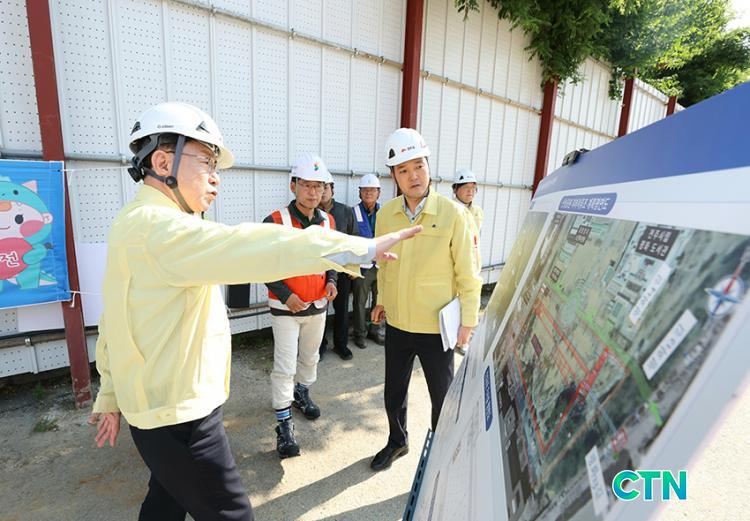
우 시장이 첫 번째로 방문한 학소지구 우수저류시설 설치사업은 평화동 일원의 고질적인 침수 피해를 예방하기 위해 오는 2028년까지 총 272억 원의 사업비를 집중 투입하는 대규모 방재 프로젝트다. 현재 이곳에는 대량의 빗물을 임시 저장할 수 있는 신성공원 우수저류조와 학소제 우수저류지 등이 조성 중이며, 우 시장은 현장 감리단과 실무진을 만나 여름철 폭우 시 가동될 비상 배수 시스템과 공사 현장의 수해 방지 대책을 꼼꼼히 확인했다. 이어 완산구 중인동에 위치한 농업용 저수지인 갈마제를 찾은 우 시장은 저수지 제방의 안전 상태를 확인하고, 자체 사전점검 과정에서 도출된 취약 요인에 대한 긴급 조치 계획을 보고받았다. 특히 현장에서 집중호우 발생 시 저수지 인근 주민들의 대피 동선과 실시간 재난 상황 전파 체계 등 매뉴얼 전반을 점검하며 빈틈없는 선제적 방재 행정을 주문했다. 전주시는 이번 점검을 기점으로 향후 인명피해 우려 지역과 주요 건설 사업장에 대한 상시 순찰 조치를 지속하고 비상 상황 발생 시 즉각적인 초동 대처가 가능하도록 현장 대응체계를 한층 격상해 운영할 방침이다.
이처럼 지자체장이 직접 수해 취약 현장을 돌며 방재 시설을 점검하는 행보는 본격적인 장마철을 앞두고 지역 사회의 경각심을 고취하고 예기치 못한 인명 피해를 예방한다는 측면에서 필수적인 조치로 평가받는다. 특히 대규모 예산이 투입되는 우수저류조 사업의 진척 상황을 실무적으로 챙기는 것은 중장기적 도시 방재 능력을 강화하는 데 기여하는 바가 크다.
그러나 이러한 현장 행보가 단순히 시설물의 외관을 둘러보는 일회성 점검에 그치지 않기 위해서는, 실제 야간 폭우나 돌발성 게릴라 호우가 발생했을 때 작동할 민관 합동 비상 대피 시스템의 실효성을 담보해야 한다는 과제가 남는다. 저수지 제방의 미세 균열이나 하수 관로의 퇴적물 상태 등은 육안 점검만으로 잡아내기 어려운 만큼, 첨단 계측 장비를 활용한 상시 모니터링 체계를 확충하고 고령층이 많은 저수지 인근 주민들의 실제 대피 유도 매뉴얼을 현실에 맞게 정비하는 실질적인 후속 조치에 행정력을 집중해야 할 전망이다.
[영문번역 기사-AI활용]
Woo Beom-ki, Mayor of Jeonju City, emphasized, "Disaster response begins with identifying and taking action against risk factors directly in the field. As heavy rains can lead to significant damage in a short period, we must preemptively inspect and manage disaster-vulnerable facilities." Jeonju City has stepped up field-centered safety management for disaster-prone facilities to block risk factors that threaten citizen safety, such as flooding and reservoir levee collapses, ahead of the summer concentrated heavy rains and rainy season. Accordingly, Mayor Woo visited the Hakso District stormwater storage facility construction site in Pyeonghwa-dong, Wansan-gu, and the Galma-je reservoir in Jungin-dong sequentially on the afternoon of June 9 to personally inspect the safety management status and the progress of disaster prevention projects.
The Hakso District stormwater storage facility construction project, which Mayor Woo visited first, is a large-scale disaster prevention project investing a total budget of 27.2 billion won by 2028 to prevent chronic flooding damage in the Pyeonghwa-dong area. Currently, the Shinseong Park stormwater storage tank and the Hakso-je stormwater storage pond, which can temporarily store large amounts of rainwater, are under construction. Mayor Woo met with field supervisors and staff to meticulously check the emergency drainage systems and flood prevention measures at the construction site. Next, visiting Galma-je, an agricultural reservoir located in Jungin-dong, Wansan-gu, Mayor Woo verified the structural integrity of the reservoir levee and received briefings on emergency measures for vulnerable factors identified during previous self-inspections. In particular, he checked the evacuation routes for nearby residents and the real-time disaster information dissemination system in case of heavy rain, ordering a tight, preemptive disaster prevention administration. Jeonju City plans to continue routine patrols for areas vulnerable to casualties and major construction sites starting from this inspection, upgrading the field response system so that immediate initial responses can be made during emergencies.
Such steps by the head of a local government, directly visiting vulnerable sites to inspect disaster prevention facilities, are evaluated as essential measures to raise awareness in the local community and prevent unexpected casualties ahead of the monsoon season. In particular, personally managing the progress of the stormwater storage project, where a large budget is invested, greatly contributes to strengthening mid-to-long-term urban disaster prevention capabilities.
However, for such field administrative steps not to end up as mere one-time inspections checking only the exterior of facilities, the challenge remains to guarantee the effectiveness of the joint public-private emergency evacuation system that will operate during actual nighttime downpours or sudden guerrilla heavy rains. Since micro-cracks in reservoir levees or sediment buildup in sewage pipes are difficult to detect through visual inspections alone, authorities must focus administrative capabilities on practical follow-up measures, such as expanding constant monitoring systems using high-tech measuring equipment and updating actual evacuation guidance manuals for nearby residents, many of whom are elderly.
 |
최동주 인턴기자 dongjoo3333@naver.com
|