2026.06.11(목) 10:50
 교육타임즈 지면신문









|
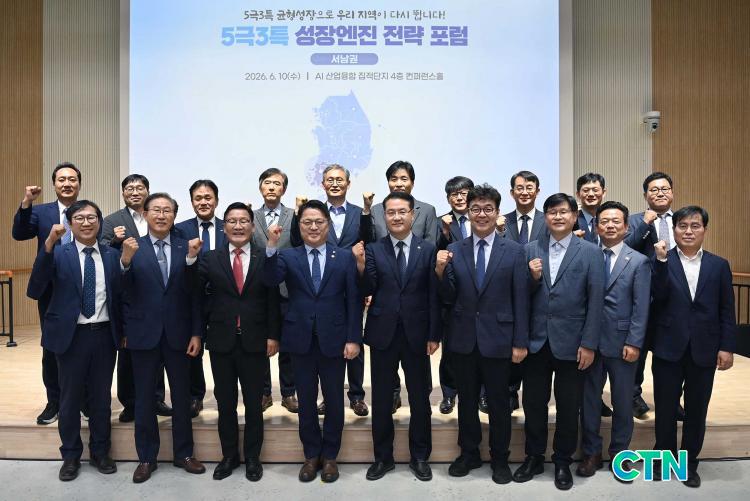
이번 포럼은 서남권 권역을 시작으로 이달 말까지 제주, 중부권, 대경권, 전북, 강원, 동남권 등 수도권을 제외한 전국 5극3특 권역을 순회하며 개최될 예정이다. 핵심 골자는 지방정부가 제출한 희망 수요 산업을 바탕으로 권역별 산업 여건과 성장 잠재력, 미래 가치 등을 종합 검토해 최종 '성장엔진 산업'을 지정하는 것이다. 산업부는 지정된 권역별 대규모 투자 프로젝트를 활성화하기 위해 재정, 금융, 인력, 기술, 인프라, 세제, 규제특례 등 이른바 '7종 지원 패키지'를 범부처 차원에서 총동원해 파격적인 인센티브를 제공한다는 구상을 내놨다. 이날 행사에서는 산업연구원의 성장엔진 수요 산업 분석 발표와 광주연구원의 서남권 산업 육성 방향 제언이 진행됐으며, 한국지역정책학회장인 나주몽 교수의 사회로 패널 토론이 이어졌다. 토론에 참여한 기아 김희삼 상무는 광주공장에 대한 지속 투자 계획을 밝히며 정부 차원의 재정적 지원을 촉구했고, 김영문 광주광역시 문화경제부시장은 성공적인 사업 정착을 위해 중앙·지방정부 간의 지속적인 협력을 확약했다.
이처럼 정부가 수도권 집중 현상을 완화하기 위해 전국을 5대 초광역권과 3대 특별권역으로 세분화하고, 각 지역의 대표 앵커기업 투자와 연계해 맞춤형 산업 생태계를 조성하겠다는 정책 기조는 국가 균형발전이라는 거시적 관점에서 타당한 행정 행보로 평가받는다. 부처별로 파편화되어 있던 재정 지원과 규제 완화 카드를 하나의 패키지로 묶어 기업의 대규모 투자를 유인하겠다는 전략 역시 실무적인 유인책이 될 수 있다.
하지만 대대적으로 홍보한 '7종 지원 패키지'의 구체적인 세부 예산 편성과 법적 규제특례 범위가 확정되지 않은 상태에서, 전국을 돌며 의견 수렴만 반복하는 순회 포럼 방식은 전형적인 '조기 성과 내기용 말잔치'에 불과하다는 현장의 냉소적인 반응을 피하기 어렵다. 정부의 구체적인 보조금 규모나 세제 혜택 가이드라인이 명시되지 않다 보니 지역 앵커기업들은 선제적 투자 확약을 꺼리며 눈치싸움만 벌이는 실정인 만큼, 단순 지역 순회 행사를 진행하는 데 급급할 것이 아니라 기업들이 즉각 투자에 착수할 수 있도록 실효성 있는 실무 패키지 세부 설계안을 실효성 있게 입증해 제시하는 것이 이 정책의 안착을 좌우할 실질적인 과제다.
[영문번역 기사-AI활용]
Moon Shin-hak, Vice Minister of Trade, Industry and Energy, stated, "Today's Growth Engine Strategy Forum will be the starting point for transforming the spatial industrial map of the Republic of Korea's economic growth into a multi-polar system of 5 poles and 3 special zones. The Ministry will mobilize all available policy measures to actively support each region so that they can establish and grow their own independent industrial ecosystems to self-sustain and compete." The Ministry of Trade, Industry and Energy (MOTIE) announced that it held the '5 Poles and 3 Special Zones Growth Engine Strategy Forum' with around 100 industrial officials from the Gwangju and Jeonnam regions, including local governments and anchor companies, to discover the core that will lead regional economic growth and to realize multi-polar balanced national growth.
This forum started with the Southwest region and will be held sequentially by touring all regions across the country, excluding the metropolitan area, including Jeju, the Central region, the Daegyeong region, Jeonbuk, Gangwon, and the Southeast region until the end of this month. The core point is to finalise the designation of 'growth engine industries' by comprehensively reviewing regional industrial conditions, growth potential, and future value based on the desired industries submitted by local governments. MOTIE laid out a plan to provide unprecedented incentives by mobilizing a so-called '7-type support package' encompassing finance, banking, human resources, technology, infrastructure, taxation, and regulatory exceptions at the pan-interministerial level to vitalize designated large-scale regional investment projects. At the event, presentations on the analysis of growth engine industry demands by the Korea Institute for Industrial Economics and Trade and suggestions on the nurturing direction of the Southwest industrial current status by the Gwangju Institute were conducted. Following this, a panel discussion was held, chaired by Professor Na Ju-mong, president of the Korean Association for Regional Policy. Kim Hee-sam, Managing Director of Kia, expressed plans for continuous investment in the Gwangju plant and called for government-level financial support, while Kim Young-moon, Vice Mayor for Cultural and Economic Affairs of Gwangju Metropolitan City, pledged continuous cooperation between the central and local governments for the successful settlement of the project.
The government's policy framework to subdivide the nation into five mega-regions and three special regions to alleviate the concentration in the metropolitan area, and to build tailored industrial ecosystems linked with investments from representative regional anchor companies, is evaluated as a reasonable administrative move from the macro perspective of balanced national development. The strategy to bind fragmented financial support and regulatory relaxation cards from various ministries into a single package to induce large-scale investments from enterprises can also serve as a practical incentive.
However, in a situation where the specific budget allocation and legal scope of regulatory exceptions for the heavily promoted '7-type support package' have not been finalized, the method of touring the nation merely to repeat opinion collections can hardly avoid cynical responses from the field that it is nothing more than a typical 'rhetoric-driven show for early results.' Since the government's specific subsidy scales or tax benefit guidelines are not clarified, regional anchor companies are hesitant to pledge preemptive investments, engaging in a waiting game. Therefore, rather than focusing solely on conducting routine regional tour events, sophisticatedly designing and presenting an effective, detailed blueprint of the practical package so that enterprises can immediately embark on investments is the substantial task that will determine the settlement of this policy.
 |
가요진 기자 gyj1119@naver.com
|