2026.06.10(수) 15:06
 교육타임즈 지면신문









|
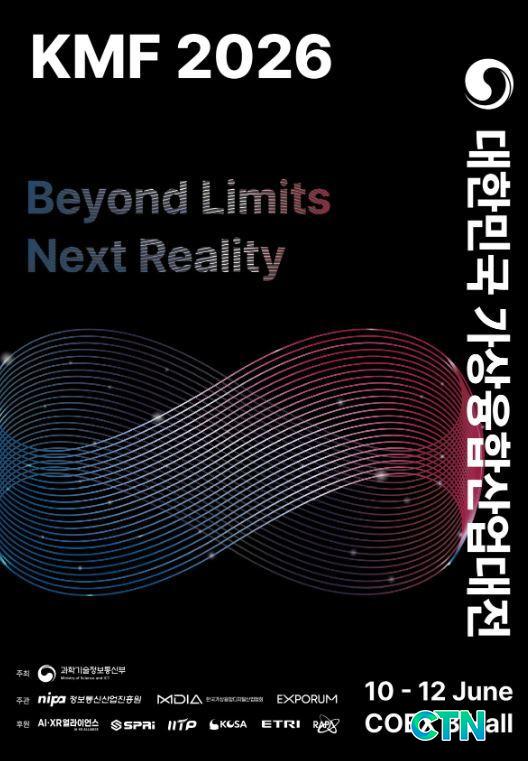
이번 전시회는 140개사 270부스 규모로 조성되었으며 정부·공공기관의 성과를 보여주는 거버넌스관을 비롯해 비즈니스관, 혁신관, 체험관 등으로 세분화됐다. 전시장에서는 디지털 트윈 기반 VR 트럭 안전체험관, AR 스마트글라스용 광학 모듈, 점자 촉각 패드 등 고도화된 기술들이 대거 공개된다. 특히 최근 글로벌 기업들의 격전지로 부상한 스마트글래스를 직접 착용해 볼 수 있는 'XR 스마트글래스 체험존'이 참관객들의 눈길을 끈다. 국내 기업 제품은 물론 삼성전자·구글·퀄컴이 공동 개발한 '갤럭시 XR', 메타의 '레이밴 메타', 애플 비전프로 등이 총출동했다. 아울러 엔비디아와 오픈AI 기술 기반의 스튜디오인 네이티브 포린 등 국내외 전문 연사진이 참여하는 글로벌 컨퍼런스가 진행되며, AI·XR 분야 유망기업 8개사가 참여하는 채용박람회와 20개 투자사가 집결하는 스타트업 투자마켓도 함께 열린다.
정부 부처가 급변하는 글로벌 정보통신기술(ICT) 패러다임에 발맞춰 AI와 공간컴퓨팅의 융합 트렌드를 한눈에 확인할 수 있는 대규모 비즈니스·체험의 장을 마련한 것은 국내 테크 생태계 확장 측면에서 시의적절한 조치로 읽힌다. 단순히 기술을 나열하는 정적인 전시에서 벗어나 청년층을 위한 채용박람회와 스타트업의 자금줄을 틔워줄 투자 IR 마켓을 유기적으로 결합하고, 일반 대중이 가상융합 기기의 30년 발전사를 직관적으로 체감할 수 있도록 기획한 대목은 고무적인 접근이다.
그러나 이러한 대형 전시회의 화려한 흥행 이면에 자리 잡은 국내 가상융합 산업의 구조적 취약성을 고려하면 일회성 행사 중심의 지원책은 분명한 한계를 노출한다. 이번 체험존의 핵심 축을 담당하는 차세대 기기들이 상당수 애플, 메타, 구글 등 글로벌 빅테크 기업들의 독과점 플랫폼에 의존하고 있어, 국내 기업들은 독자적인 하드웨어나 생태계를 구축하지 못한 채 단순 콘텐츠 공급자(CP) 역할에 머무는 흐름이 반복되기 때문이다. 겉으로 드러나는 부스 규모와 관람객 수라는 단기 지표에 안주하는 소극적 행정을 넘어, 국내 부품·광학 모듈 기업들이 글로벌 공급망의 핵심 리더로 성장할 수 있도록 세제 혜택과 R&D 펀딩을 과감하게 확대해야 한다. 나아가 소프트웨어 스타트업들이 해외 플랫폼에 종속되지 않도록 토종 XR 비즈니스 표준 프로토콜을 정립하고, 민관이 공동으로 출자하는 개방형 공간컴퓨팅 인프라를 전방위로 확충하는 등 기초 체력을 다질 근본적인 대책 마련이 풀어야 할 난제다.
[영문번역 기사-AI활용]
Ryu Je-myung, Second Vice Minister of Science and ICT, stated, "The combination of virtual convergence and artificial intelligence is a core driving force that creates new value across industries and daily life, moving beyond mere technological innovation. The government will also actively support virtual convergence technology so that it can create a new reality and generate growth opportunities alongside AI in various fields such as education, manufacturing, culture, and healthcare." The Ministry of Science and ICT announced that it is holding the '2026 Korea Metaverse Festival (KMF 2026),' the nation's largest exhibition in the virtual convergence industry, for three days from June 10 to 12 at Hall B on the first floor of COEX in Seoul. Marking its 11th anniversary this year, the event features the slogan 'Beyond Limits, Next Reality' to look out over the present and future of the virtual convergence industry.
The exhibition is structured with 140 companies and 270 booths, subdivided into a Governance Pavilion showing the achievements of government and public institutions, alongside a Business Pavilion, Innovation Pavilion, and Experience Pavilion. At the exhibition hall, advanced technologies such as a digital twin-based VR truck safety experience center, optical modules for AR smart glasses, and tactile braille pads are being unveiled in large numbers. In particular, the 'XR Smart Glasses Experience Zone,' where visitors can directly wear smart glasses—a sector that has recently emerged as a battleground for global tech giants—is drawing major attention from attendees. Along with domestic products, the 'Galaxy XR' jointly developed by Samsung Electronics, Google, and Qualcomm, Meta's 'Ray-Ban Meta,' and Apple Vision Pro have all gathered in one place. Furthermore, a global conference featuring 10 domestic and international expert speakers, including NVIDIA and OpenAI-based animation studio Native Foreign, is being conducted, alongside a job fair joined by eight promising AI and XR companies and a startup investment market gathering 20 investment firms.
The government ministry's provision of a large-scale business and experience venue to check the convergence trends of AI and spatial computing in line with the rapidly shifting global ICT paradigm is interpreted as a timely move in terms of expanding the domestic tech ecosystem. Breaking away from static exhibitions that merely arrange technologies, organically combining a job fair for the youth and an investment IR market to open up funding lines for startups, and planning the event so that the general public can intuitively experience the 30-year history of virtual convergence devices are encouraging approaches.
However, considering the structural vulnerabilities of the domestic virtual convergence industry underlying the spectacular success of such large exhibitions, one-off event-centered support policies show clear limitations. A flow recurs where next-generation devices, which form the core axis of this experience zone, heavily rely on the monopolistic platforms of global big tech firms like Apple, Meta, and Google, leaving domestic companies remaining as mere content providers (CP) without building independent hardware or ecosystems. Moving beyond passive administration that remains complacent with short-term indicators like outward booth sizes and the number of visitors, the government must boldly expand tax benefits and R&D funding so that domestic component and optical module companies can grow into core leaders of the global supply chain. Furthermore, establishing native XR business standard protocols to prevent software startups from becoming subordinate to foreign platforms, and omnidirectionally expanding open spatial computing infrastructure jointly funded by the public and private sectors to build baseline strength remain difficult problems to solve.
 |
가요진 기자 gyj1119@naver.com
|