2026.06.16(화) 16:11
 교육타임즈 지면신문









|
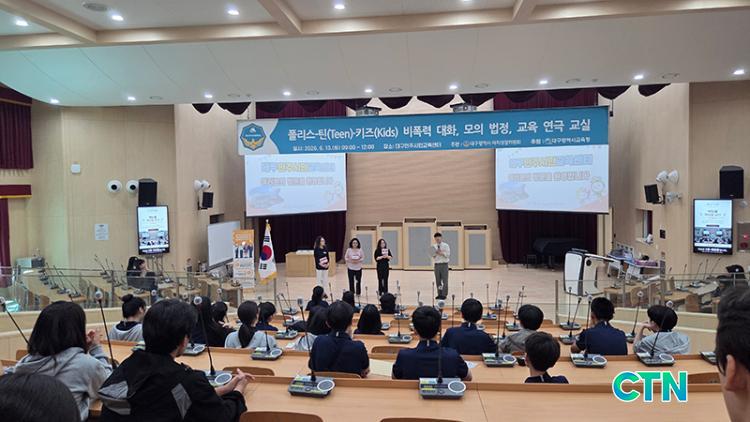
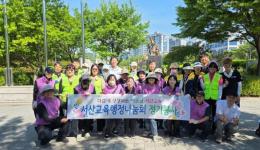
위원회는 지난 6월 13일 대구민주시민교육센터에서 관내 청소년들로 구성된 '폴리스-틴(Teen)·키즈(Kids)' 제6기 회원들을 대상으로 올해 새롭게 도입한 모의법정 프로그램과 비폭력 대화 체험교실, 교육연극 프로그램을 성황리에 운영했다고 발표했다. 이번 행사는 공감과 공존의 가치를 배우는 민주시민교육의 일환으로 기획됐으며, 청소년들이 다각적인 시각을 기를 수 있도록 지난해보다 확대된 총 3개 과정으로 전개됐다. 특히 올해 첫선을 보인 모의법정 프로그램은 학생들이 직접 판사, 검사, 변호사, 피고인 등의 사법 요직 역할을 맡아 사회적 갈등과 청소년 관련 법적 쟁점을 공방 형식으로 다루는 방식으로 진행됐다. 이를 통해 참가 학생들은 법치주의의 가치를 깨닫고 논리적인 토론 기법을 익혔다. 함께 진행된 비폭력 대화 체험교실은 미국의 심리학자 마셜 로젠버그가 제안한 대화법(NVC)을 기반으로 관찰과 평가의 구분, 강요와 부탁의 차이 등을 교육했으며, 교육 연극 프로그램에서는 '진짜 나만 아니면 될까?'라는 공동체적 질문을 연극 배역을 통해 고민하는 시간을 가졌다.
대구 자치경찰이 단순한 주입식 범죄 예방 교육이나 시설 견학 형태에서 완전히 탈피해, 청소년들이 직접 사법 주체가 되는 '모의법정'과 심리학 기반의 '비폭력 대화법'을 유기적으로 묶어 3개 과정의 맞춤형 패키지로 고도화한 것은 자치경찰제 취지에 부합하는 정무적으로 매우 영리하고 실용적인 교육 행정 사례다. 일상 속 갈등 상황을 역할극과 법적 공방으로 치환해 청소년들의 공동체 협력 가치와 객관적 시각을 동시에 일깨워준 대목은 청소년 치안 거버넌스의 모범 답안이라 할 만하다.
그러나 이러한 다채로운 체험 프로그램과 자치경찰의 민주시민 교육 노력이 단발성 주말 이벤트나 일시적인 예산 소진성 행사에 그치지 않기 위해서는, 프로그램 수료 이후 일선 학교 현장에서 발생할 수 있는 학교폭력이나 청소년 갈등 징후를 실시간으로 모니터링하고 예방하는 '사후 실무 연계망(포스트 가이드라인)'이 촘촘하게 구축되어야 한다는 지적이 나온다. 하루 동안 판사와 검사 역할을 체험했어도, 정작 실제 학교로 돌아갔을 때 발생하는 사이버 불링이나 언어폭력 등 실질적인 갈등 상황에서 이를 중재할 사후 시스템이 유기적으로 작동하지 않는다면 교육 효과가 반감될 수 있기 때문이다. 대구 자치경찰위원회는 이번 제6기 프로그램 종료 이후 교육청 및 일선 학교와 연계해 '폴리스-틴·키즈 사후 또래 중재인 제도'를 상설화하고, 학교폭력 전담 경찰관(SPO)과의 사후 멘토링 채널을 개설하는 후속 실무 행정을 보강해야 한다. 이러한 체계적인 사후 환류 메커니즘이 뒷받침되어야만, 모의법정에서 배운 사법 정의와 평화적 소통 능력이 청소년들의 실제 일상에 뿌리내려 안전한 대구 교육 공동체를 안착시키는 국익으로 이어질 수 있을 것이다.
[영문번역 기사-AI활용]
Lee Jung-goo, Chairman of the Daegu Metropolitan Independent Police Commission, stated, "Going beyond having youths learn peaceful communication methods, cultivating a perspective to view social conflicts objectively and justly through mock courts will serve as a great foundation for growing into mature democratic citizens. We will continue to expand empathy and practice-centered democratic citizenship education programs tailored to the eye level of youths." The Daegu Metropolitan Independent Police Commission has significantly reinforced experiential education infrastructure capable of solving daily conflicts by themselves to prevent youth crimes and foster mature democratic citizens.
The commission announced that it successfully operated the newly introduced mock court program along with nonviolent communication experimental classrooms and educational theater programs for the 6th members of 'Police-Teen and Kids' at the Daegu Democratic Citizenship Education Center on June 13. This event was designed as part of democratic citizenship education to learn the values of empathy and coexistence, and expanded into a total of three courses compared to last year so that youths could develop multi-dimensional perspectives. In particular, the mock court program, introduced for the first time this year, was driven in a method where students directly took on roles such as judges, prosecutors, lawyers, and defendants to deal with social conflicts and youth-related legal issues in a debate format. Through this, participating students understood the value of the rule of law and mastered logical debate techniques. The concurrent nonviolent communication experimental classroom, driven based on the Nonviolent Communication (NVC) proposed by American psychologist Marshall Rosenberg, educated the distinction between observation and evaluation, and the difference between coercion and request, while the educational theater program provided time to ponder the communal question, "Is it really okay as long as it's not me?" through theater roles.
The move where the Daegu Independent Police completely broke away from simple cramming-style crime prevention education or facility tours, and instead advanced into a customized package of three courses by organically binding 'mock courts' where youths directly become judicial subjects and psychology-based 'nonviolent communication methods,' is evaluated as a highly smart and practical educational administrative case matching the purpose of the independent police system. Substituting daily conflict situations into roleplays and legal battles to simultaneously awaken youths' community cooperative values and objective perspectives stands as a model answer for youth public safety governance.
However, critics point out that for these colorful experiential programs and the independent police's democratic citizenship education efforts to avoid ending up as short-term weekend events or temporary budget-consuming functions, 'post-practical connection networks (post-guidelines)' capable of monitoring and preventing school violence or youth conflict signs that may occur in real school fields after completing the program must be densely built. This is because even if they experienced judge and prosecutor roles for a day, if post-systems capable of mediating substantial conflict situations like cyberbullying or verbal violence when returning to actual schools do not operate organically, the educational effect could be halved. The Daegu Independent Police Commission must permanentize a 'Police-Teen and Kids Post-Peer Mediator System' in connection with the Office of Education and front-line schools after this 6th program ends, and complement follow-up practical administrations that open post-mentoring channels with school safety specialized officers (SPO). Only when this systematic post-feedback mechanism is supported will the judicial justice and peaceful communication capabilities learned in the mock court take root in youths' real daily lives, leading to national interests that settle a safe Daegu educational community.
 |
이수현 기자 leegikook@hanmail.net
|