2026.06.16(화) 16:11
 교육타임즈 지면신문









|
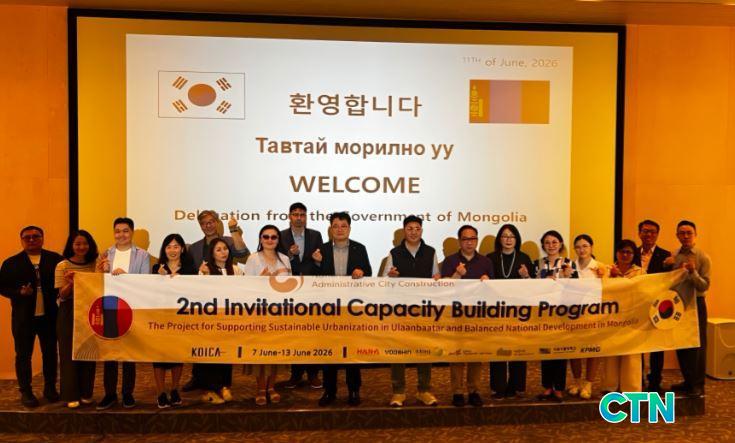
행복청은 몽골 도시개발건설주택부 국장 일행이 세종시 행정중심복합도시(이하 행복도시)를 방문해 신도시 개발 과정 전반을 견학하고 국가 핵심 과제 협력 방안을 논의했다고 지난 11일 밝혔다. 현재 몽골 정부는 수도 울란바타르의 인구 과밀화를 해결하기 위해 신행정수도인 '하르허롬(Kharkhorum)'과 수도권 위성도시인 '훈누(Hunnu)' 개발을 국가 최우선 과제로 추진 중이다. 이번 방문은 한국의 우수한 도시 인프라와 주거 단지 조성 방식을 자국 신도시 설계에 도입하려는 몽골 측의 공식 요청에 따라 성사됐다. 양국의 도시개발 협력은 지난해 5월 바트바야르 문후 '훈누' 개발행정청장 방문과 8월 후렐바타르 남다바 대통령실 수석보좌관, 할타르 루브산 '하르허롬' 시장 등 고위급 대표단의 연쇄 방문으로 다져진 결과다. 이번 방문단은 고위급 외교 채널을 넘어 실제 현장 설계를 담당하는 전문가와 엔지니어 등 핵심 실무진으로 구성됐다. 이들은 행복도시 홍보관에서 브리핑을 청취한 뒤, 토지이용계획과 정주 여건 조성을 위한 세부 전략을 집중적으로 살펴봤다. 오드바야르 몽골 도시개발건설주택부 국장은 "우수한 행복도시 건설 노하우를 직접 벤치마킹할 수 있는 뜻깊은 자리였다"며 "앞으로 몽골의 신도시 개발사업에 협력과 교류가 더욱 확대되기를 기대한다"고 전했다.
정부 부처가 국내에 축적된 행정수도 건설 경험과 토목·정보기술(IT) 인프라를 단순한 외교적 상호방문에 묵혀두지 않고, 신행정수도 건설이라는 거대 국책 사업을 앞둔 몽골 당국에 맞춤형 기술 표준으로 제시한 시도는 '도시 행정 수출' 측면에서 매우 실효성 높은 행정 사례로 풀이된다. 특히 외교적 수사만 오가는 고위급 회담 단계에서 탈피해 실제 도면을 그리고 현장을 지휘하는 엔지니어 중심의 실무 방한을 유도해 냄으로써, 한국형 도시 모델(K-신도시)의 지배력을 몽골 현지에 투영하고 향후 국내 건설·설계 기업들의 대규모 수주 기회로 연계한 대목은 국익 극대화를 겨냥한 행복청의 노련한 정무적 기획력이 반영된 결과다.
그러나 이러한 중앙 아시아 신흥국과의 도시개발 협력 및 기술 전수 정책이 단발성 견학이나 형식적인 현장 브리핑 제공 등 전시 행정으로 변질되지 않기 위해서는, 방한 종료 이후 몽골 현지에서 우리 설계 공법과 자재가 우선 채택될 수 있도록 보장하는 '기술적·행정적 사후 연계망 및 실무 상설 지원 체계(포스트 가이드라인)'가 철저하게 수반되어야 한다는 지적이 나온다. 벤치마킹 단계에서 아무리 우수한 인상을 심어주었더라도, 정작 하르허롬과 훈누의 실제 발주 단계에서 사후적으로 유기적인 기술 자문이 이어지지 않는다면 중국 등 경쟁국들의 저가 수주 공세에 밀려 국내 기업의 실질적인 해외 진출 기회를 상실할 위험이 크기 때문이다. 행복청은 이번 몽골 실무진의 방문 행정 종료 이후 양국 건설 전문가가 상시 소통하는 '사후 도시개발 실무 워킹그룹'을 조속히 제도화해야 하며, 국내 유관 건설사 및 국토교통부와의 사후 민관 합동 거버넌스를 가동해 몽골 현지 마스터플랜 수립 단계부터 사후 참여할 수 있는 후속 실무 보완책을 단행해야 한다. 이러한 유기적인 사후 순환 행정이 뒷받침될 때 비로소 타국 행정수도 벤치마킹 지원이라는 외교적 성과가 국내 건설 경기 부흥과 행정 수출이라는 실질적인 국익으로 치환될 수 있을 것이다.
[영문번역 기사-AI활용]
An Gyo-pil, Chief of the International Cooperation and Information Team at the National Administrative City Construction Agency, stated, "We expect that the trust built through steady exchanges with the Mongolian government will serve as a foundation for Korean companies to enter the Mongolian new city development market." The National Administrative City Construction Agency (NAACC, Commissioner Kang Ju-yup) has entered into an all-out urban administration marketing to secure political stepping stones for domestic construction companies to pioneer new West Asian markets, while simultaneously implanting Korean-style new city construction know-how into the Mongolian government, which faces the national challenge of capital overcrowding.
The NAACC announced on the 11th that a delegation of director-generals from the Mongolian Ministry of Urban Development, Construction and Housing visited the Multifunctional Administrative City (MAC) in Sejong to inspect the overall process of new city development and discuss cooperation plans for core national tasks. Currently, the Mongolian government is driving the development of 'Kharkhorum,' a new administrative capital, and 'Hunnu,' a metropolitan satellite city, as top national priorities to resolve the population overcrowding of the capital, Ulaanbaatar. This visit was organized following an official request from the Mongolian side to benchmark the construction cases of the MAC in the process of new city development due to high preference for Korea's urban infrastructure and residential complex composition methods within Mongolia. Urban development cooperation between the two countries has been strengthened by successive visits of high-level delegations, including Batbayar Munkhoo, Head of the 'Hunnu' Development Administration in May last year, followed by Khurelbaatar Namdavaa, Chief Advisor to the Presidential Office, and Khaltar Luvsan, Mayor of 'Kharkhorum' in August. Shifting away from simple high-level diplomatic channels, this visiting delegation was composed of core practitioners, including experts and engineers in charge of actual field design. They listened to a briefing on the overall urban development process at the MAC Promotion Hall, and intensively examined detailed strategies for land use planning and settlement condition creation. Odbayar, Director General of the Mongolian Ministry of Urban Development, Construction and Housing, stated, "It was a meaningful opportunity to personally benchmark the excellent construction know-how of the MAC. We look forward to further expanding cooperation and exchanges in Mongolia's new city development projects in the future."
The move where the government agency did not leave domestic administrative capital construction experiences and civil engineering-IT infrastructures buried in simple diplomatic mutual visits, but instead presented them as customized technical standards to the Mongolian authorities facing massive national projects, is interpreted as a highly effective administrative case in terms of 'urban administration export.' In particular, breaking away from high-level meeting stages where only diplomatic rhetoric is exchanged and inducing the visit of practitioners centered on engineers who draw actual blueprints and command fields highlights the NAACC's sophisticated political planning power to project the dominance of the Korean-style new city model (K-New City) into Mongolia and link it to substantial order opportunities for domestic construction and design firms.
However, critics point out that for these new city development cooperation and technology transfer描 policies with emerging Central Asian countries to avoid degenerating into exhibition administrations like short-term field briefings or simple inspection tours, 'technical and administrative post-connection networks and practical permanent support systems (post-guidelines)' capable of guaranteeing that our design methods and materials are preferentially adopted in local Mongolia after the visit must be thoroughly accompanied. This is because even if an excellent impression was planted during the benchmarking stage, if organic post-technical consultations do not continue during the actual bidding stages of Kharkhorum and Hunnu, there is a high risk of losing practical overseas advancement opportunities for domestic companies due to low-cost bidding offensives from competing nations like China. The NAACC must swiftly institutionalize a 'post-urban development practical working group' where construction experts from both countries communicate constantly after completing this Mongolian delegation's visit, and implement follow-up practical supplementations that allow post-participation from the local master plan establishment stage by activating a post-public-private joint governance with domestic related construction firms and the Ministry of Land, Infrastructure and Transport. Only when this organic post-distribution feedback mechanism operates stably will the diplomatic achievement of supporting a foreign country's administrative capital benchmarking be translated into substantial national interests of reviving the domestic construction economy and exporting public administration rather than stopping at short-term field tours.
 |
가요진 기자 gyj1119@naver.com
|