2026.05.30(토) 10:51
 교육타임즈 지면신문









|
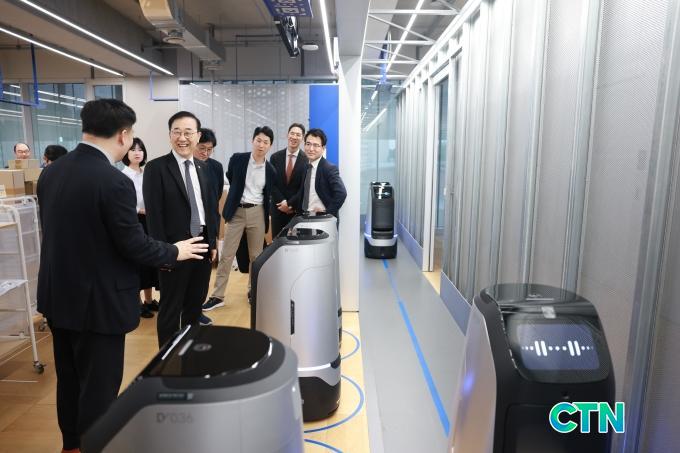
가장 심각한 맹점은 로봇 상용화를 가로막는 법적·제도적 걸림돌을 방치해 온 당사자가 정작 국토교통부 자신이라는 점이다. 김 장관은 정책과 제도적 지원 부족을 '현실'이라며 남 얘기하듯 진단했으나, 자율주행 로봇의 건축물 내 운행 기준이나 스마트 주차로봇의 안전기준 마련을 차일피일 미뤄온 것은 국토부의 전형적인 늑장 행정 때문이다. 이제야 '주택건설기준 등에 관한 규칙'을 개정하겠다며 입법예고에 나선 것을 두고 혁신을 선도하는 양 생색을 내는 행태는 앞뒤가 맞지 않는다. 현장 기업들이 수년 전부터 규제 샌드박스를 통해 눈물겨운 실증을 이어올 동안 부처 문턱을 높여왔던 국토부가, 대기업 사옥의 화려한 시연회에 참석해 혁신의 주체인 체하는 것은 기만적이다.
또한 국토부 국토지리정보원이 추진 중인 '모빌리티 보행지도' 구축 사업 역시 특정 기업에 특혜성 데이터와 실증 기회를 몰아주는 구조라는 의혹을 피하기 어렵다. 올해 네이버랩스와의 기술협력을 통해 네이버 사옥 주변의 보행지도부터 구축하겠다는 계획은, 공공의 예산과 자산인 고정밀 3차원 데이터를 특정 대기업의 로봇 운행 안정성 테스트를 위해 맞춤형으로 들이붓는 꼴이다. 중소 로봇 스타트업들이 도심 내 이면도로나 일반 주거지역에서 데이터 부족으로 고사하고 있는 현실은 외면한 채, 이미 완벽한 인프라를 갖춘 네이버 사옥을 찾아 '기술협력'이라는 명분으로 치적을 홍보하는 것은 성과주의의 극치다.
결국 국토교통부의 이번 로봇친화 건축물 현장 방문은 알맹이가 빠진 전시성 성과주의의 결과물이다. '혁신건축물법' 발의에 기대를 걸고 있으나 구체적인 규제특례 범위나 공공 마중물 지원의 예산 규모는 여전히 안개 속이다. 말뿐인 '과감한 규제합리화'라는 구호로는 글로벌 로봇 시장의 격차를 좁힐 수 없다. 국토부는 대기업 사옥을 찾아가 사진을 찍는 생색내기식 현장 행보를 중단하고, 중소·중견 기업들까지 차별 없이 혜택을 볼 수 있는 보행지도 데이터의 전면 개방과 공동주택 내 로봇 인프라 의무화 등 실질적이고 근본적인 제도 정비에 행정력을 집중해야 한다.
[영문번역 기사-AI활용]
Kim Yun-deok, Minister of Land, Infrastructure and Transport, pointed out, "While the mobile robot industry is rapidly expanding into our real lives, such as delivery, parking, charging, construction sites, and security, the reality is that policies and institutional support for the commercialization of these technologies are lacking." He also stated, "In the future, through the safe use and revitalization of mobile robots, we plan to strongly promote land, infrastructure and transport policies, such as establishing spatial information infrastructure, promoting autonomous driving technology, and drastic regulation rationalization." This is the stance regarding Minister Kim's visit to the Naver 1784 office building to observe the multi-robot integrated platform 'ARC' technology of its subsidiary Naver Labs and express the ministry's commitment to spreading robot-friendly buildings. However, harsh criticism is raised that the head of the competent ministry used a 'detached way of speaking' as if turning the responsibility for the delay in regulatory innovation to the external environment, and that it is a 'showy administration' trying to piggyback on the completed testbed of a large corporation.
The most serious blind spot is that the party that has neglected the legal and institutional obstacles blocking the commercialization of robots is the Ministry of Land, Infrastructure and Transport itself. Minister Kim diagnosed the lack of policy and institutional support as a 'reality' as if talking about someone else, but it is due to the typical delayed administration of the ministry that has postponed the establishment of operation standards for autonomous robots inside buildings or safety standards for smart parking robots. It is inconsistent to show off as if leading innovation just because they are now amending the 'Rules on Housing Construction Standards' through a legislative notice. It is deceptive for the ministry, which has raised the threshold of the department while on-site companies have continued tearful demonstrations through regulatory sandboxes for years, to visit a flashy demonstration at a large corporation's office building and pretend to be the agent of innovation.
In addition, the 'Mobility Pedestrian Map' construction project being promoted by the National Geographic Information Institute under the ministry is also hard to avoid suspicions that it is a structure that drives preferential data and demonstration opportunities to a specific company. The plan to build a pedestrian map around the Naver office building first through technical cooperation with Naver Labs this year is tantamount to pouring high-precision 3D data, which are public budgets and assets, tailored for testing the operation stability of a specific large corporation's robots. While ignoring the reality that small and medium robot startups are dying due to a lack of data on backroads in downtown areas or general residential areas, visiting the Naver office building, which already has perfect infrastructure, and promoting achievements under the pretext of 'technical cooperation' is the height of performance-oriented approach.
In the end, this site visit to a robot-friendly building by the Ministry of Land, Infrastructure and Transport is the product of a hollow, exhibitionary performance-oriented approach. While placing hopes on the proposal of the 'Innovative Building Act,' the specific scope of regulatory exemptions or the budget scale for public priming support are still up in the air. The slogan of 'drastic regulation rationalization' in words alone cannot narrow the gap in the global robot market. The ministry must stop superficial field moves of visiting large corporations' office buildings to take photos, and concentrate administrative power on practical and fundamental institutional arrangements, such as the full opening of pedestrian map data and the mandatory integration of robot infrastructure in multi-family housing so that small, medium, and mid-sized enterprises can benefit without discrimination.
 |
가요진 기자 gyj1119@naver.com
|