2026.06.02(화) 01:21
 교육타임즈 지면신문









|
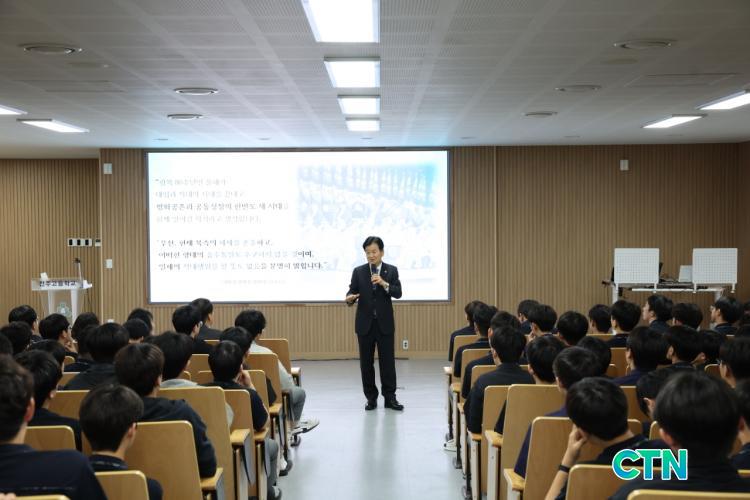
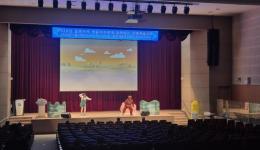
이번 특강의 가장 큰 맹점은 통일부가 내세운 '평화공존과 공동성장'의 비전이 냉혹한 한반도의 지정학적 위기를 정면으로 바라보지 못하고 있다는 점이다. 신뢰 회복과 긴장 완화는 우리 정부의 일방적인 구호나 조치만으로 결코 도달할 수 없는 상대적 영역이다. 그럼에도 불구하고 복잡한 국제정치적 역학 관계나 북핵 위협의 실체에 대한 냉철한 분석은 쏙 뺀 채, 청소년들에게 화해의 역사적 물길만 강조하는 것은 반쪽짜리 안보 의식을 심어줄 우려가 크다. 장관이 졸업한 유서 깊은 모교라는 상징성을 앞세워 행사의 이벤트 효과를 극대화하려 했을지는 모르나, 정작 강의를 들은 고등학생들이 급변하는 동북아 정세 속에서 균형 잡힌 국가관을 정립하는 데 어떤 실질적인 도움이 되었을지는 의문이다.
더욱이 강연의 마무리에서 미래세대의 주역이 되기 위해 제시한 '자유로운 상상, 풍부한 독서, 많은 여행' 같은 제언들은 통일부 장관의 정책 특강이라기엔 지나치게 모호하고 원론적인 훈화 수준에 그친다. 교육청 관계자들과의 차담회를 거치며 현장의 목소리를 들었다고는 하지만, 일선 학교의 평화통일 교육이 직면한 실질적인 교재 부족이나 학생들의 무관심을 해결할 제도적 대안은 이번 행보 어디에서도 찾아볼 수 없다. 연례행사처럼 돌아오는 교육주간에 맞춰 장관의 친정 방문식을 기획하고, 이를 정부의 통일 비전 선포식처럼 포장하는 행정 편의주의적 관성이 고스란히 묻어난다.
결국 통일부의 전주고등학교 방문 특강은 내실 있는 안보 교육보다는 고위 공직자의 개인적 서사와 결부된 전시 행정의 단면을 보여준다. 교실 안에서의 일회성 소통과 긍정적 사고의 당부만으로는 한반도의 평화 체제를 공고히 할 수 없다. 통일부는 장관의 모교 방문을 치적으로 홍보하는 생색내기식 언론 플레이를 즉각 중단해야 한다. 대신 일회성 특강의 형식주의에서 벗어나 디지털 세대의 눈높이에 맞는 객관적이고 다원적인 통일 교육 콘텐츠를 개발하고, 교실 밖 현장에서 학생들이 남북 관계의 현실과 안보의 가치를 균형 있게 체득할 수 있는 상설 교육 인프라를 전면 재구축하는 데 행정 역량을 집중해야 한다.
[영문번역 기사-AI활용]
Minister of Unification Jeong Dong-young emphasized in his lecture that ending hostility and confrontation between the South and the North and moving toward a new relationship of peaceful coexistence is a task of the times, explaining that peace on the Korean Peninsula is becoming more important than ever amid the unstable international situation. He followed by saying that to this end, he will consistently continue measures to practice peace preemptively, while making efforts to restore trust and ease tensions between the South and the North. This is the part where the minister, who stood on the lecture desk of his alma mater to mark the 14th Peaceful Unification Education Week, emphasized the justification of reconciliation and cooperation toward the future generation. This emotional peace message unfolded with the minister's home return seems sufficient to decorate the headlines of the media. However, injecting the moderate theory of 'preemptive peace' to students inside a controlled classroom, while thoroughly ignoring continuous provocations from North Korea and the grim security reality, is nothing more than a typical 'showy romantic administration' lacking real-world sense.
The biggest blind spot of this special lecture is that the vision of 'peaceful coexistence and joint growth' put forward by the Ministry of Unification fails to square face the harsh geopolitical crisis of the Korean Peninsula. Restoring trust and easing tensions are relative areas that can never be reached by our government's unilateral slogans or measures alone. Nevertheless, emphasizing only the historical current of reconciliation to youth, while completely leaving out coolheaded analysis on the complex international political dynamics or the reality of North Korean nuclear threats, raises high concerns about planting a half-baked security consciousness. They might have tried to maximize the event effect of the exhibition by putting forward the symbolism of the historic alma mater from which the minister graduated, but it is questionable what practical help it provided for high school students who heard the lecture to establish a balanced national view amid the rapidly changing Northeast Asian situation.
Furthermore, proposals such as 'free imagination, abundant reading, and lots of travel' presented at the end of the lecture to become the leaders of the future generation stay at a level of excessively vague and principled moral discourse for a policy special lecture by the Minister of Unification. They said they heard the voice of the field while having a tea meeting with officials from the education office, but institutional alternatives to solve the practical lack of textbooks or students' indifference faced by peaceful unification education in schools cannot be found anywhere in this move. The administrative convenience-oriented inertia of planning the minister's home visit in line with the education week that returns like an annual event and packaging it like the government's unification vision declaration ceremony is blended as it is.
In the end, the special lecture at Jeonju High School by the Ministry of Unification shows an aspect of exhibition administration connected with the personal narrative of a high-ranking public official rather than substantial security education. One-off communication inside a classroom and requesting positive thinking alone cannot solidify the peace system on the Korean Peninsula. The Ministry of Unification must immediately stop superficial media play that promotes the minister's alma mater visit as an achievement. Instead, breaking away from the formalism of one-off special lectures, it should develop objective and pluralistic unification education contents tailored to the eye level of the digital generation, and concentrate administrative capabilities on completely rebuilding permanent education infrastructure where students can experience the reality of inter-Korean relations and the value of security in a balanced way in the field outside the classroom.
 |
가요진 기자 gyj1119@naver.com
|